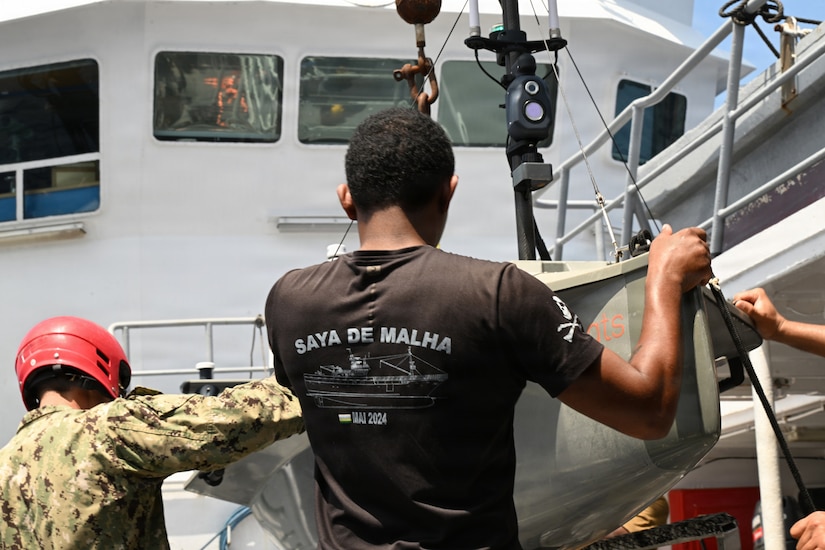
The Lightfish is Seasats’ small, portable unmanned surface vessel (USV). Sea‑state‑rated, solar‑electric with a hybrid reserve, it measures roughly 11–12 ft (≈3.5 m), weighs about 305 lb (138 kg) and carries ~66 lb (≈30 kg) of payload. It’s designed for persistent maritime surveillance, survey and security missions (modular plug‑and‑play payloads, cameras, AIS/Iridium/Starlink comms, on‑board AI/edge processing), endurance up to about six months, and a low cruise speed (around 4–5 knots) with capability to operate in sea‑state 6 and during GPS denial.
A USV (unmanned/uncrewed surface vessel) is a boat or ship that operates on the water’s surface without people aboard, controlled remotely or autonomously to perform tasks (surveillance, mapping, patrol, mine counter‑measures). It differs from aerial drones (UAVs) and underwater vehicles (UUVs/AUVs) by operating in the surface maritime domain (different launch/recovery, communications, endurance and sea‑state stresses), by using marine‑specific sensors/payloads, and by having distinct legal/collision and navigation challenges.
Commander, Task Force 66 is a U.S. Navy task‑force designation (a component command within U.S. naval tasking structures). In the article context the title refers to the U.S. commander who led the Lightfish launch for the joint force — i.e., a U.S. Navy/Joint Force‑led role, not a partner‑nation commander.
Exercise Cutlass Express is an annual multinational maritime security exercise in East Africa and the Western Indian Ocean led by U.S. Naval Forces Africa/USAfricom (and supported by U.S. Naval Forces Europe/Africa). Its stated goals are to strengthen regional maritime security, improve partner capacity for law enforcement at sea (counter‑piracy, illegal fishing, trafficking), and enhance interoperability through combined training and information sharing. Dozens of regional and international partner nations typically participate.
The war.gov article says the Lightfish was launched “from a partner nation’s vessel” but does not name the country; independent reporting (USNI/Breaking Defense) says the launch took place off Seychelles, and Seasats/press reporting lists Seychelles Coast Guard as a partner platform in regional activity. The article likely withholds the partner’s name for operational/security or diplomatic reasons.
Launching a partner‑launched USV matters because it proves multinational interoperability (launch/recovery procedures, comms, C2 and data sharing), enables allies to field persistent sensors from their ships, and builds trust and tactics for combined operations without requiring a U.S. ship. It lowers logistic friction for coalition operations and demonstrates that partner platforms can safely operate and recover foreign autonomous systems in real missions.
After this demonstration the likely next steps are further integration and interoperability testing with partners (communications, command‑and‑control, safe launch/recovery), more multinational exercises and operational deployments for maritime domain awareness (persistent surveillance, ISR, hydrography, maritime security), and potential mission tailoring (sensors or quick‑reaction interceptors) based on operational feedback.