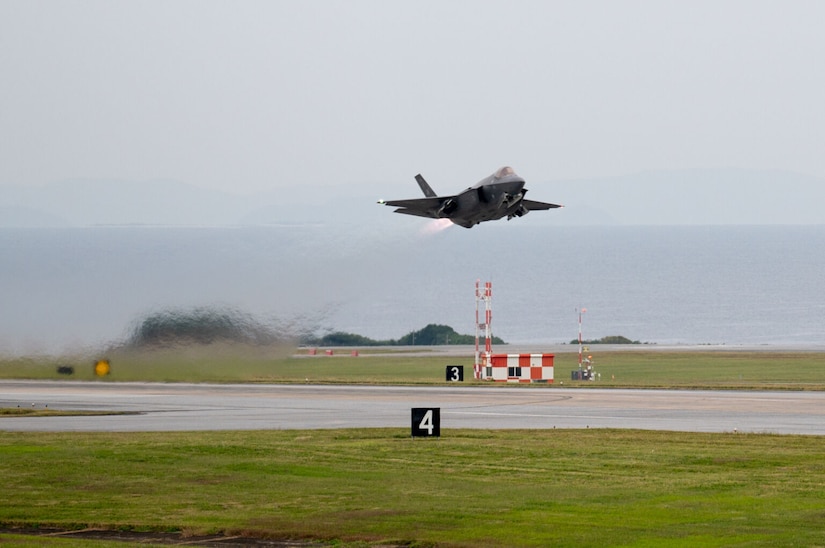
The F-35A Lightning II is the U.S. Air Force’s standard version of the F‑35: a single‑seat, single‑engine, “fifth‑generation” stealth fighter designed to do multiple jobs (air‑to‑air combat, striking ground targets, and gathering/intelligence and electronic warfare). It uses a conventional takeoff and landing (CTOL) design, like most normal jets, and is optimized for land‑based air forces.
It differs from the other F‑35 variants mainly in how it takes off/lands and where it operates:
All three share the same basic airframe family, engine type, stealth design and sensor/avionics concept, but are structurally tailored to Air Force (A), Marine STOVL (B), or Navy carrier (C) needs.
The 356th Expeditionary Fighter Squadron (356th EFS) is a deployed version of the regular 356th Fighter Squadron, a U.S. Air Force F‑35A unit. The parent 356th Fighter Squadron is part of the 354th Fighter Wing and is based at Eielson Air Force Base, Alaska.
When designated “Expeditionary,” the squadron is on temporary deployment away from Alaska. Recent examples include deployments to Kadena Air Base, Japan, and training/operations across the broader Indo‑Pacific region, where it flies F‑35A sorties, trains with U.S. and allied forces, and supports air‑defense and deterrence missions.
In this context, an “Air Force rotation” is a planned, temporary deployment of a fighter squadron and its support personnel to an overseas base for a set period, after which another unit replaces it.
The main tasks and objectives typically include:
At Kadena Air Base in Japan, for example, F‑35A squadrons—including the 356th EFS—rotate in under the “fighter rotation program” to keep “steady‑state fighter capabilities” in place as earlier F‑15s are retired.
“Deterrence at altitude” is an Air Force phrase meaning that the visible, ready presence of advanced combat aircraft in the sky is intended to discourage potential adversaries from aggressive actions.
In this article’s context, it refers to F‑35A missions flown from bases like Kadena at operational altitudes, showing that U.S. and allied forces can quickly achieve air dominance, coordinate with other aircraft, and respond to threats. The idea is that continuous, well‑trained air operations—“every sortie we fly and every partner we train with”—signal capability and resolve, which is supposed to make opponents think twice about starting a conflict.
For F‑35A operations, to “deliver combat airpower” means being ready and able to carry out the full range of combat missions the jet was built for, from the deployed location. In practical terms this includes:
During rotations like the one described, the 356th EFS practices these roles in training and large exercises with U.S. and Japanese units so that, if ordered, they could immediately shift from training flights to real combat missions from that base.
For F‑35 and other fighter units, rotational deployments typically last on the order of a few months, though the exact length can vary by mission and unit. Public reporting on fighter rotations to Kadena Air Base indicates that squadrons often serve rotational tours of roughly several months before being relieved by another squadron, in order to maintain “steady‑state” fighter coverage.
More broadly, U.S. Air Force deployments commonly range from about 4 to 12 months, with around six months being a standard duration for many operational deployments, though some rotational “surge” packages can be shorter.
These rotations for F‑35A units in this article are mainly conducted in the Indo‑Pacific—especially at Kadena Air Base on Okinawa, sometimes operating with or from other regional locations (such as Marine Corps Air Station Iwakuni) during exercises and training.